

Multipack 10x Noxion Lucent LED Spot GU10 PAR16 5W 520lm 36D - 840 Cool White | Replaces 80W


€33.81
€27.44
excl. Tax
incl. Tax
+
€0.50
Ecotax
Order today, shipped tomorrow
Want to order larger quantities?
- Free shipping above €121 incl. TaxFree shipping above €100 excl. Tax
- Business customer? Purchase on account
- Easy returns within 14 days
Specifications
Clear
General Information
| SKU | 244959 | |
|---|---|---|
| EAN | 8719157040433 | |
| Brand | Noxion | |
| Manufacturer Name | Multipack 10x Noxion LEDspot GU10 4.8-65W 840 36D 450lm ND | |
|
i
The recommended quantity refers to the number of products pre-packaged by the manufacturer. When you buy this quantity, we deliver the products in the original package from the manufacturer.
|
Full box quantity | 1 |
|
i
Our all-in warranty is fully included in the product price and covers both hidden defects and technical defects of the product that occurred before delivery. The warranty period differs per product and ranges from 1 year to a maximum of 7 years.
|
Any Lamp all-in warranty | 2 Years |
|
i
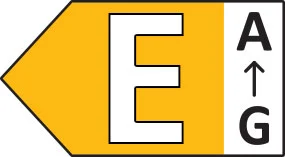
 Every bulb or fixture has an energy efficiency class A to G. Energy label A is the most efficient and G the least. LED lighting is the most sustainable lighting technique. Even if a LED bulb is rated E or lower, they still save 70% of energy compared to conventional lighting with the same energy label. Why is it the same label then? To motivate LED brands to get even more durable.
 |
Energy efficiency class | E |
| Average Lifetime (h) | 25000 |
Technical Information
|
i
The technology indicates the operating base of a light source. The most well-known and energy-efficient example is LED. Other techniques include Halogen, gas discharge, TL (fluorescent) and the light bulb.
|
Technology | LED |
|---|---|---|
| Product Type Category | GU10 LED | |
|
i
This indicates which wattage of your old/conventional lighting is replaced by this LED product.
|
Replaces (Watt) | 60 |
|
i
A beam angle indicates the angle of the light beam coming from a light source. The smaller the radiation angle in degrees (D), the narrower the beam angle.
|
Beam Angle (degree) | 36 |
|
i
When you dim lights, the full power does not have to be used. You therefore save extra on energy costs. Dimmable lamps can also be used to create an extra cosy atmosphere. Keep in mind that you need a LED dimmer to dim LED lights.
|
Dimmable | Not Dimmable |
|
i
The cap/base of a bulb is the part that connects it to the socket in the fixture. E27 (Edison screw) and E24 (small Edison screw) caps/bases are among the most popular, although this depends on your location. GU10 is generally the most common cap/base for spotlights. Check which cap/base you need carefully as many other types are also available.
|
Cap / Base | GU10 |
|
i
Lighting with a sensor only turns on when it receives a specific signal. This reduces energy costs. The (built-in) sensors respond to darkness (twilight switch) and/or movement (motion sensor).
|
Type of sensor | No Sensor |
Lamp Information
| Bulb finish | Clear | |
|---|---|---|
| Series | Lucent |
Dimensions
| Height (mm) | 52 | |
|---|---|---|
| Diameter (mm) | 50 | |
|
i
The shape tells you something about the design of a LED bulb or conventional bulb. This literally describes the design of the light source, for example a pear or candle shape. In some cases, the name of a product also tells you something about its size. A GU10 AR111 LED spotlight, for example, has a diameter of 111 mm.
|
Shape | Spot |
|
i
The exact shape tells you something about the design of an LED bulb or conventional bulb. This is the technical name for the bulb shape, where the letter(s) describe the design of the light source and the number tells you something about the size of the bulb. For example, P45 means a pear shape with a diameter of 45 mm, while G125 is a globe shape with a diameter of 125 mm.
|
Exact shape | PAR16 |
Downloads

